
Article: What Is Patina and Why Do Jewelers Use It?
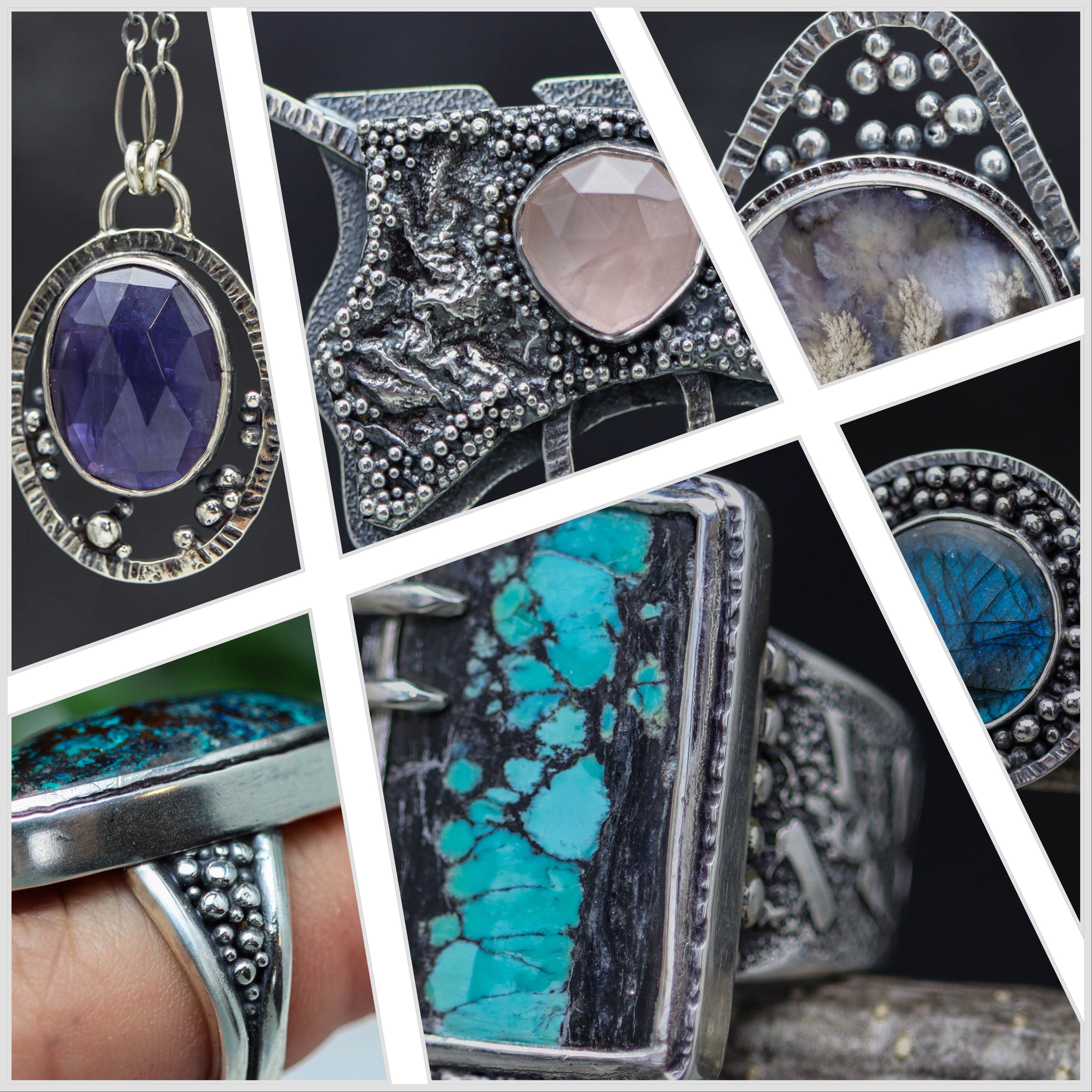
What Is Patina and Why Do Jewelers Use It?
I often use patina in my work, and over the years I've realized that many people aren't familiar with what it is or why jewelers use it on sterling silver. So I thought it might be helpful to explain a little bit about the process and why it plays such an important role in my work.
When I use patina, I'm generally referring to the use of liver of sulfur. It's a rather malodorous product that smells exactly like you would imagine sulfur would smell—rotten eggs. Liver of sulfur is a sulfur-based compound, primarily made up of potassium sulfides, that reacts with the surface of silver.
The use of liver of sulfur on sterling silver creates a dark coating or patina on the surface of the metal, generally ranging from gunmetal gray to nearly black. Chemically speaking, the sulfur reacts with the silver to form silver sulfide on the surface of the metal. Interestingly, this is the same compound that develops when silver tarnishes naturally over time. The difference is that patina is intentionally applied, carefully controlled, and used as a design element. Tarnish develops naturally and often unevenly, usually dulling the appearance of the metal rather than enhancing it.
There are other products available that can create even deeper black finishes on silver, but many are considerably more hazardous to work with, so I tend to use liver of sulfur most of the time.
After giving the metal its coating of patina, the piece is buffed to remove the patina from the high spots, allowing it to remain in any depressions or textures so you can actually see them better. It breaks up the solid plane of color, reflecting light off the high spots while the darker recessed areas absorb light, instantly adding dimension to the piece. I can't imagine my work without this step and never skip it.
So why do this? Why not keep everything bright shiny silver?
Well, for a few reasons really.
First and foremost, adding patina—especially on textured silver—brings out the texture, makes it more visible, and adds dimension and nuance to the design. If everything were polished to a mirror shine, much of that detail would blend together and become visually flattened.
All bright shiny metal is certainly a look people enjoy, but it's difficult to maintain. It requires a lot of care, attention, and polishing. It brings to mind when I used to do art shows and there was a jeweler near my booth who made gorgeous hand-forged silver jewelry. Really, it was lovely and incredibly well made. Getting that mirror finish on every piece is a labor of love and takes a tremendous amount of work.
But this jeweler had to handle everything in his display while wearing cotton gloves so as not to mar the surface of the metal with fingerprints. If a potential customer tried something on, the moment they touched it, fingerprints appeared and he was polishing again. The sheer labor involved in keeping sterling silver looking that way makes it a chore to wear.
Not to mention that any tiny scratch or surface mark becomes immediately visible. It looks beautiful, but in my mind it isn't especially practical for everyday wear. I appreciate the craftsmanship very much, but I want jewelry that can be worn and enjoyed without constantly worrying about every little mark.
Having texture and patina on silver makes it much more wearable. Minor scratches from everyday use become far less noticeable. The patina also slows the appearance of visible tarnish, and even if a piece has been sitting out for a while, a quick swipe with a polishing cloth usually brings it right back to life. It makes the care and maintenance of sterling silver much easier and makes it more enjoyable to wear long term. Where bright polished silver tends to highlight every little discoloration, patinated silver disguises it beautifully.
So Why Does Sterling Silver Tarnish?
Sterling silver tarnishes because silver reacts with sulfur-containing compounds naturally present in the air. Over time, this reaction forms silver sulfide on the surface of the metal—the same compound used in many patinas. The difference is that tarnish develops naturally and unpredictably, while patina is intentionally created and controlled by the jeweler to enhance the design.
Humidity, air pollution, certain cosmetics, rubber products, wool, and even some foods can accelerate the tarnishing process. Sterling silver is made up of 92.5% silver and 7.5% copper, and while pure silver can tarnish on its own, the copper content also reacts with the environment and contributes to discoloration over time.
Interestingly, some people find that their jewelry tarnishes much faster than other people's. Skin chemistry, medications, cosmetics, swimming pools, sulfur-rich well water, humidity, and even the climate where you live can all affect how quickly silver tarnishes.

Left: Oxidation/tarnish developing naturally
Middle: Bright silver with texture but no patina
Right: Patinated and finished silver
Caring for Sterling Silver Jewelry
Caring for sterling silver jewelry is fairly straightforward. If you store it away from the air in a dry environment, it will tarnish more slowly. Keeping a jewelry polishing cloth on hand will make quick work of any dulling or tarnish that develops.
If a piece gets dirty or badly tarnished, avoid silver dip products whenever possible. They can strip away intentional patinas and remove a tiny amount of metal from the surface with repeated use. Instead, give the piece a quick wash in warm soapy water and use a soft brush, such as a toothbrush, to clean any nooks and crannies. Dry it thoroughly, then finish with a polishing cloth.
Another tool I like to use is a nail buffer—specifically one of the high-shine styles around 1000/4000 grit. OPI makes a nail shiner buffer that works like a magic wand on silver. It's a handy thing to keep around for this purpose as well.
Ultimately, I use patina because it brings out the dimension and texture in my work. It highlights the details that make a handcrafted piece interesting to look at and easy to live with. For me, it's one of the most important finishing steps in the process, and I wouldn't want to work without it.

Written by Janine Krantz


1 comment
I love the way you patina your jewelry! It adds depth and detail to the piece that elevates the look even more. Sure shiny sterling has its place and sometimes I’ll choose that. But then there’s the tarnish and easy to see scratches. I appreciate the intention and attention you put in every hand-crafted piece you make.
Amanda Emerson
Leave a comment
This site is protected by hCaptcha and the hCaptcha Privacy Policy and Terms of Service apply.